Be a Master in C++ in your 11th grade
GET YOUR GRADES HIGHER BY WATCHING OUR SITE !!!
eASY C++
A +


Chapter 10 -Flow of controls
Important terms and definitions
1.if statement
if is known as conditional control structure or selection structure because
it checks for the given condition and then selects the particular action or just ignores it.
forMAT
if(condition)
{
Program statements ;
}
For example
if(age<= 21)
{
cout<<"You are a minor.\n";
cout<<"What is ur grade?";
cin>>grade;
FOR STATEMENT
The for statement encloses one or more C++ statements that form the body of the loop , the statements in the loop repeat continuously upto certain number of times the loop repeats.The format of the for loop is for initialization
expression[s];text-expression;update expression.
For example,
int ctr;
for[ctr =[ 1; ctr < = 10; ctr = ctr + 1]
{
cout << ctr << ";
}
SWITCH STATEMENT
The switch statement handles a series of decisions by checking a particles variable or expressions for different
values it may assume and basing upon it,different actions are taken
For example
switch(opt)
{
case1:cout<<"I am in case 1";
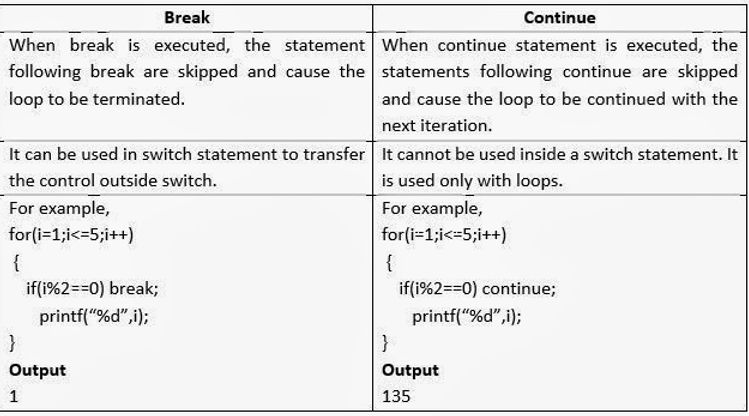
break;
case 2:cout<<"I am in case 2";
break:
case 3:cout<<"I am in case 3";
break;
deafualt:
cout<<"\n Invalid option select";
]
3.WHILE STATEMENT
The while statement is known as entry control loop beacuse it executes a set of statements till the condition is evaluated as true. The while statement is one of several C++ construct statements .A construct is a programming language statement of a series of statements that control looping
For instance
i=1
while(i<=0)
{
fact=fact*i;
i++;
Do while statement
This loop is similar to the while loop,except that with do-while ,the relational as long as the result is true ,
the body of the loop continues to execute.
For eg
int value;
do
{
cout<<"Enter the number to be reversed.";
cin>>value;
if(value<=0)
cout<<"The number must be positive \n";
}
while (value<=0)